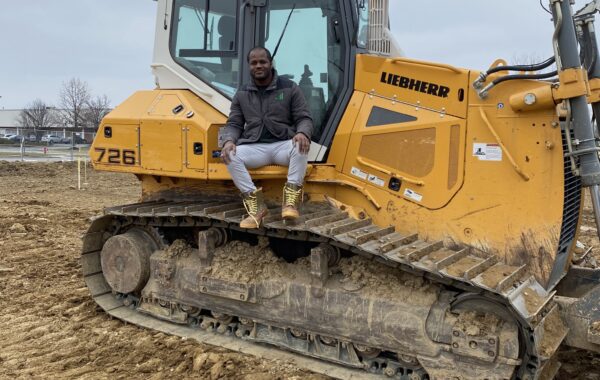

The same vacant lot looks completely different depending on who’s evaluating it. Learning to run all four questions at once is the whole job — and it’s how I think about every piece of dirt.
By John Delia Jr. — Licensed Michigan Builder
Most people look at a vacant lot and see one thing. A buyer sees a house they’d like to live in. A flipper sees a price. A first-time builder sees a blank canvas. Each of them is looking at it one way — and looking only one way is exactly how good money gets lost on dirt.
I’ve learned to look at the same lot four ways at once. Not because it’s clever, but because a real decision requires it. The builder in me asks whether I can build it well and predictably. The developer asks whether the dirt is worth buying at all. The investor asks whether the money and the risk actually work. And the owner asks whether someone will want to live there — and afford to stay.
Same lot. Four questions. The discipline is holding all four at the same time. To keep it concrete, let’s put one lot on the table and walk it through each lens.
The lot: a narrow infill parcel in an established Detroit neighborhood. Roughly 30 feet wide. A house stood on it once; it was demolished a few years ago. Asking price about what you’d pay for a used car. On a listing page, an easy scroll-past. Through four ways of thinking, a real decision.
Think Like a Builder
Can I build it well?
Thinking like a builder is about certainty. Before I ever quote a project, I want the whole thing estimated — not just the house, the project: the sitework, the utilities, the grading, the carry, all of it. I take off real quantities, I organize the budget on standardized cost codes so it can be compared to past jobs instead of guessed at, and I build a schedule that treats time as a line item, because it is one.
On our lot, the builder’s questions come fast. What does the foundation have to do, given the soil and whatever the demolition left behind? What’s the real material and labor number? How long does the sequence take, and what does every extra month cost me? The builder’s whole job is to remove as much uncertainty as possible before the first shovel — so the price you’re handed is a price, not a hope.
Think Like a Developer
Should I buy this lot?
The builder figured out what it costs. That only sharpens the next question: should we own the dirt at all? The developer’s question isn’t “is it cheap?” It’s “is it priced right?” — and those are completely different things. I run every lot through the same four layers, cheapest checks first: Can I own it clean? Can I legally build on it? Will the ground support it? And only then — should I buy it?
Our lot is a textbook case. At roughly 30 feet wide, it’s likely under the minimum to build a single-family home on its own, which quietly turns the whole deal into a question about the lot next door. There may be a buried foundation from the demolition. There may be a utility surprise under the street. And the price on the listing is just an opening bid — the developer works backward from what the finished home is really worth, subtracts every cost and every risk uncovered in the first three layers, and lands on the most they can pay. That ceiling, not the asking price, is the answer.
Think Like an Investor
Does the money work?
Now we know we can build it, and roughly what the land is worth. The investor asks the colder question: should we? This is the coldest of the four questions, and it should be — a project can build beautifully and still be a bad investment. The return isn’t the spread you sketch on a napkin — it’s the spread after carry, after risk, with an exit you decided on before you ever bought.
On our lot, the investor asks a different set of questions. How is this financed, and what does every month of holding it cost in interest, taxes, and insurance? What’s the contingency for the things the ground is hiding? And what’s the exit — sell it, rent it, hold it — chosen up front, not improvised at the end? This is also where the developer’s “by-right versus maybe” becomes a dollar figure: a lot you can permit and build quickly carries for a few months; a lot stuck waiting on a variance carries for many more — same dirt, less profit. The investor prices time and uncertainty, because those are the two things that quietly eat every deal.
Think Like an Owner
Will this create long-term value?
The numbers can pencil perfectly and still fail in the real world, because none of it matters if no one wants to live there. The owner’s question is the most human of the four, and the one builders forget. Every project ends with a person living in it, writing a check every month. If that person doesn’t exist, or can’t carry the payment, nothing upstream mattered.
On our lot, the owner’s questions shape real decisions. The house should be designed around the lot and its constraints so it actually lives well, not forced onto it. The tax bill on the finished home — reassessed far above the vacant-lot number — has to stay reachable, which is why the Neighborhood Enterprise Zone abatement isn’t paperwork; it’s the difference between a monthly payment a buyer can carry and one they can’t. Durable, low-maintenance systems matter, because the owner pays for the building long after I’m gone. Developers like to say they sell monthly payments, not houses — the owner’s question is that payment made human, and it’s the truest test of whether the other three did their job.
The point isn’t to be all four
You don’t have to be a builder, a developer, an investor, and an owner. But a good decision on a piece of dirt requires all four questions at once — and almost every expensive mistake I’ve seen, and made, came from asking only one. The buyer who only sees the house. The flipper who only sees the price. The builder who only sees the build.
The lot never changes. What changes is how many questions you ask before your money is committed. That’s the whole discipline.