

I first came to Detroit in the winter of 2012 for an Apple iOS tech conference. I stayed in Dearborn, commuted in on DDOT, and honestly, the city unsettled me. It was cold. The city felt fragmented. Neighborhoods changed block by block. Wealth and abandonment sat unusually close together.
I was wrong about the trajectory. I just didn’t know it yet.
Three years later, I came back for a wedding. By then I was halfway through my city and regional planning degree at the Knowlton School of Architecture at Ohio State. More importantly, I’d already been buying and renovating buildings as an undergrad — reinvesting every dollar back into properties just outside downtown cores. I’d developed what I called a growth value neighborhoods thesis: neighborhoods close enough to downtown to benefit from revitalization, with solid but neglected housing stock, good transit access, high vacancy, and a mix of committed homeowners and renters. Buy low, wait for the market to recognize the value, build something real. It worked in Ohio.
When the wedding bus tour took us through the neighborhoods around the Packard plant, I saw something I recognized: quality brick buildings. Architectural bones. The kind of structures that command premiums in New York because they’re scarce and beautiful. I grew up on Long Island. I knew what those buildings were worth in a different market. I also knew they were a fraction of that in Detroit — because the city had been written off.
That’s when it clicked. The value was real. The market just hadn’t caught up.
I drove three and a half hours home and started calling owners of abandoned buildings in Detroit. My father told me, “Son, every one of those abandoned buildings has an owner. Just keep trying.” So I did.
The Renovation Problem
For years, the model worked. Buy a 1920s warehouse or Victorian. Gut it. Renovate. Sell or hold. Repeat. But there’s a hard ceiling on this strategy, and I hit it during COVID.
Every hundred-year-old building is a surprise box. You open the walls and find knob-and-tube wiring, cast iron pipe corroded to nothing, foundations held together by luck and lime mortar. The experienced contractors know this going in. The investors who see a $30,000 purchase price and think they’ve found a goldmine — they learn it differently. CapEx overruns are not exceptions in old buildings. They’re the rule.
I was trying to raise institutional capital at this point. Investors with preferred returns don’t want unpredictable CapEx. It compresses their returns and makes modeling impossible. The renovation model doesn’t scale cleanly for outside capital.
So I made a decision: stop doing custom rehabs. Build new construction instead. Subdivisions. Repeatable projects with known costs and known timelines.
The Steel Pivot
Around the same time, one of my workers — Paul, who became an adviser — introduced me to cold-formed steel framing. I traveled the country visiting manufacturers, talking to engineers, learning the supply chain. The more I understood it, the more I realized steel solved a problem I was already facing.
Steel framing offered materially shorter timelines and more repeatable execution than wood. It works on narrow urban infill lots where stick-built construction requires expensive custom engineering every time. You design once. You build fifty times. The economics change completely.
I restructured my entire operation around it.
Why Detroit, Specifically
While learning steel framing, I was also studying municipal finance at the John Glenn School of Public Policy. I worked as a research analyst and helped a graduate student finish their thesis on Detroit’s municipal bankruptcy — the structural collapse, the recovery mechanisms, the long road back.
That work clarified something for me about scale and timing.
If you want to be a developer in New York, you need millions of dollars and you’re likely in your fifties unless you come from money. The barriers are by design. Detroit had thousands of vacant lots and land values that still reflected the city’s lowest point — not where it was heading.
Mayor Duggan was in office. Crime was declining. Property values were rising. Population was stabilizing. The Hudson building was rising from the ground — the first major skyscraper with new foundations in decades. Dan Gilbert was investing billions, and even he was running into real challenges. That told me something important: the comeback is genuine, but it isn’t easy. It takes staying power.
What nobody was talking about was this: despite the momentum, Detroit still feels like a small town for development. I drive through the neighborhoods I’m targeting and I don’t see dumpsters. I don’t see construction crews. I don’t see the visible intensity of building activity you’d expect given the demand. There are maybe five serious infill players. The land is there. The buyers are coming. The construction isn’t keeping up.
That gap is where I’m working.
The Execution
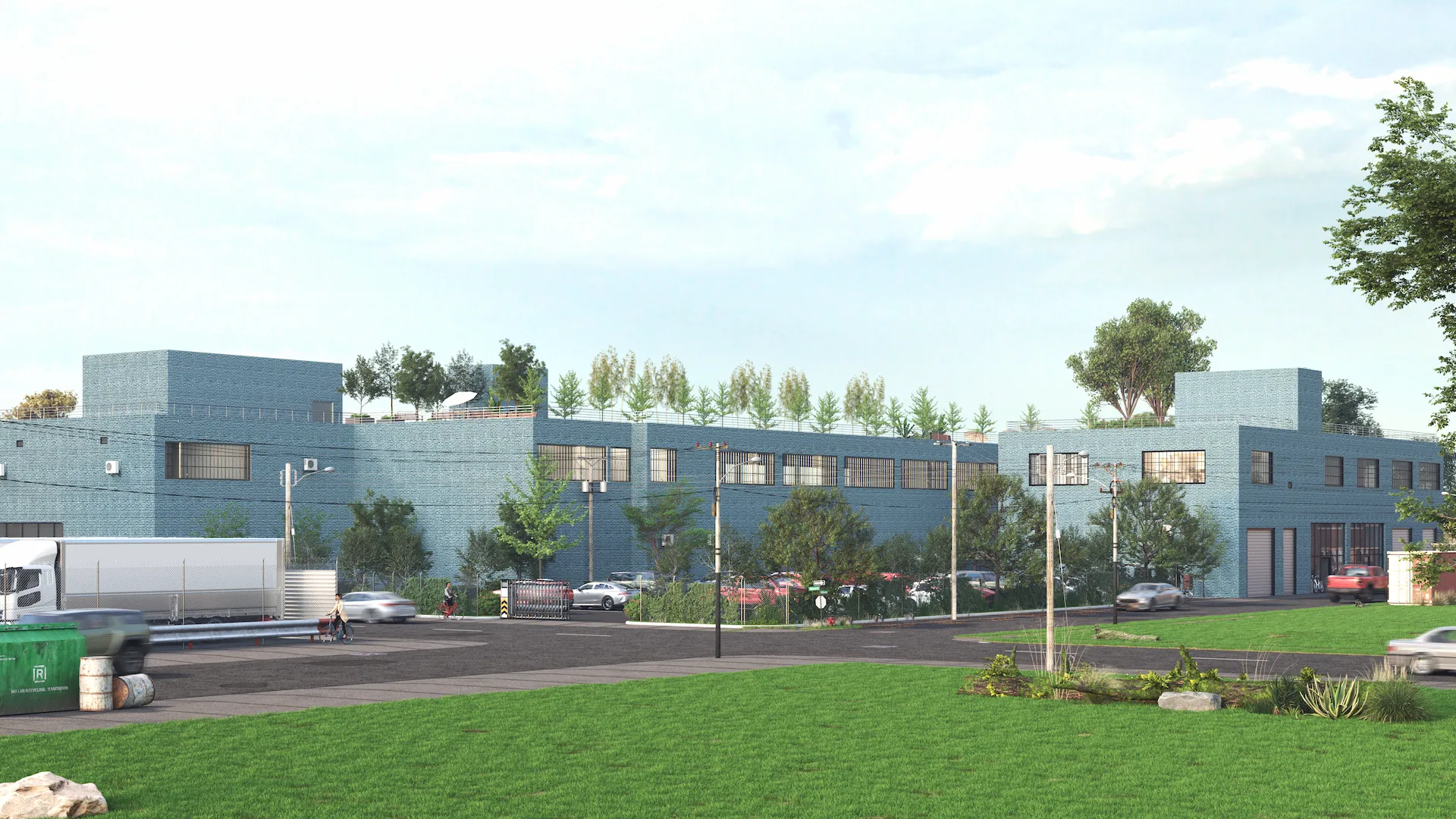
In January 2026, I relocated to Detroit full time. I’m currently redeveloping a 70,000 square foot industrial building that will become the headquarters for ResidentialSteelFraming.com and our Detroit manufacturing operation — taking everything we learned setting up the prototype factory in Springfield, Ohio and building it properly here. I got my Michigan builder’s license. I’m pursuing my real estate salesperson license to control my own transactions. And I designed a repeatable home — The Allen, 1,148 square feet, three bed, two and a half bath — engineered for Detroit infill lots and priced to work for the actual market.
I’m not just investing in Detroit. I’m building in it.
Why Now
People ask why I didn’t stay in Ohio, or why Detroit instead of a faster-growing market somewhere else.
The honest answer is that Detroit is where the real work is. You can’t fake it with marketing and momentum. The city rewards people who understand it, show up consistently, and build something that lasts. That’s a longer game than most investors want to play.
I saw this city in 2012 when the bottom had fallen out. I watched it change over fourteen years, commuting three and a half hours each way to track it. I studied why it collapsed and what it takes to come back. I invested in existing structures, hit the ceiling on that model, and rebuilt my approach around new construction and steel.
I think the market still underestimates what Detroit can become. And I think the window to build something meaningful here — before the land is priced accordingly and the competition catches up — is open right now, but not indefinitely.
That’s not optimism. That’s fourteen years of observation and a decision to act on it.