
Every generation builds differently.
Materials change—wood, steel, or something new—but what endures is the care behind how we build.
What I’m focused on is making that care visible—and scalable.
I don’t believe in forcing one “right” way to build. I believe in designing systems that let builders choose their path—and still end up with something beautiful, lasting, and intentional.
Whether you prefer panelized lumber or panelized steel, the foundation is the same:
- precision manufacturing in controlled environments
- reduced waste
- faster installation
- higher consistency than traditional on-site framing
The difference is how you express your craft.
Two systems. One philosophy.
Panelized Lumber
Warm. Familiar. Adaptable.
Panelized lumber is a bridge between traditional craft and modern efficiency.
Each wall panel is measured, cut, labeled, and assembled in a shop before arriving on-site—saving days (sometimes weeks) of field labor while preserving the feel of classic construction.
You still get the human side of building: judgment, adjustments, real-world experience. But you remove the parts that shouldn’t be heroic—weather delays, site chaos, rework, and unnecessary waste.
Best fit for:
- builders rooted in tradition
- small infill projects
- clients who prefer organic textures and conventional detailing
- teams that want speed without switching materials
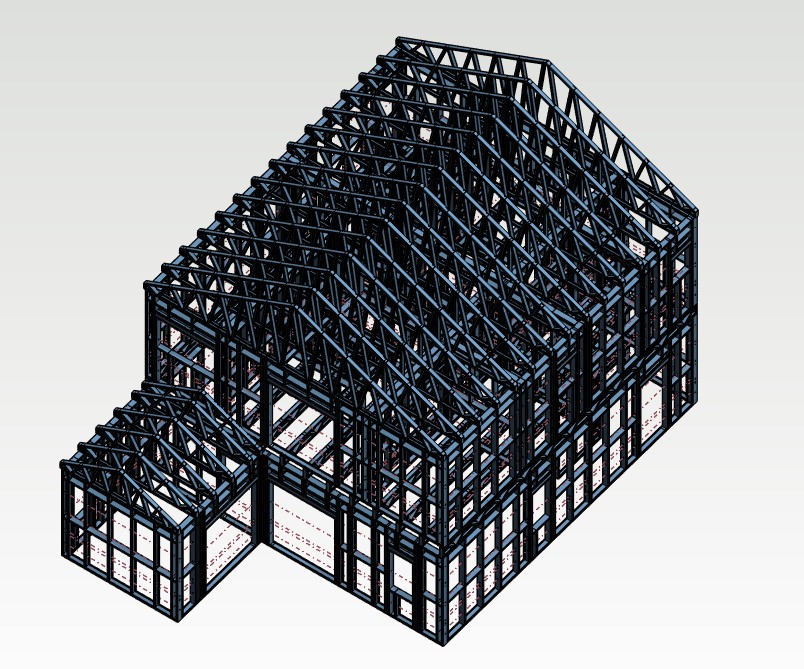
Panelized Steel
Strong. Straight. Sustainable.
Cold-formed steel introduces a different kind of confidence: it stays true.
Steel resists warping, mold, and fire. It supports tighter tolerances and cleaner architectural lines. Fabricated off-site, it becomes a framing system built to perform for decades—not just pass inspection.
Steel doesn’t remove craftsmanship. It refocuses it. The craft shifts from fighting material movement to mastering coordination, sequencing, alignment, and precision.
Best fit for:
- design-forward homeowners
- multi-unit builds and repeatable product lines
- teams tired of callbacks caused by movement and moisture
- anyone optimizing for longevity and low maintenance
Shared Values
The Offsite Advantage
Both systems share one idea: offsite fabrication + on-site assembly.
This is where technology quietly enhances craftsmanship.
Walls, floors, and roof components are built in a shop where:
- measurements are exact
- weather doesn’t interrupt
- quality can be verified before delivery
- teams work safer and more consistently
When panels arrive on site, the home takes shape in days, not months.
Precision and speed merge—without losing the human touch.
Looking Ahead
The Era of Assemblies
Today, we build in panels.
Tomorrow, we’ll build in assemblies—interoperable components that fit across multiple designs, materials, and future upgrades.
Imagine if:
- the wall from one home could fit seamlessly into another
- roofs, decks, and interiors shared a universal design language
- parts were customizable like furniture—and swappable like technology
That’s the long-term vision: a modular world where the system serves the person, not the other way around.
Design Ethos
Whether it’s wood or steel, every great build starts with intention:
- Design for life—not just for construction.
- Respect material honesty—don’t hide what makes it strong.
- Build offsite, live onsite—quality begins before ground is broken.
- Standardize where it helps, personalize where it matters.
This isn’t about trends. It’s about discipline.
It’s about building with care—and using systems to protect that care from randomness.
Closing
If you’re curious whether panelized lumber or panelized steel fits your next project, I’m happy to share what I’ve learned and what I’m seeing in the market.