
When you’re building a new construction home, every material choice sends a signal—about quality, longevity, taste, and intent. Some materials age gracefully. Others age loudly… and not in a good way.
Over the years, I’ve walked enough job sites, torn apart enough “new” homes, and watched enough shortcuts fail to develop a strong opinion on what not to use. This isn’t about being fancy or overspending. It’s about avoiding materials that look cheap on day one—or worse, scream the era they were built in five years later.
Here’s my short list of materials I actively avoid when building a new home.
1. Vinyl Siding
Let’s just call it what it is.
Vinyl siding is outdated. It reads as low-effort, low-intent housing. And the worst part? It’s not even cheap anymore.
People still choose vinyl because they think it’s a “safe” option. In reality, it fades, warps, cracks, and ages terribly. Within a few years, it starts to look tired—and once it does, there’s no saving it.
If you’re building new construction and you want the home to feel durable, intentional, and timeless, vinyl siding does the opposite. It instantly puts your house in a category you probably didn’t intend.
2. Treated Lumber Decks and Fences
Pressure-treated lumber is the classic short-term solution that becomes a long-term regret.
Yes, it’s easy. Yes, it’s familiar. But untreated or poorly maintained treated lumber decks and fences deteriorate fast. They warp, split, and discolor. And unless you’re committed to staining and sealing every few years, you’ll end up with that unmistakable green algae look creeping across your backyard.
Functionally, it works. Visually, it looks cheap—and over time, it looks neglected.
If you care about how your home ages, treated lumber outdoors is a compromise you’ll see every single day.
3. Traditional Builder-Grade Carpet
Basic carpet—especially the kind you find in most spec homes—is a dead giveaway.
It wears poorly, traps odors, and immediately dates the house. When people say, “We’ll replace it later,” what usually happens is they live with it far longer than planned… and regret it the whole time.
There are higher-end carpet options with texture, pattern, and depth. Those can work. But if you’re defaulting to the most basic carpet simply because it’s easy or familiar, I’d rather see no carpet at all.
4. Hollow Core Interior Doors
This one bothers me more than most people realize.
You can knock on a hollow core door and immediately tell—it’s cardboard inside. That sound alone cheapens the entire interior of a home.
Interior doors are something homeowners interact with every single day, yet they’re one of the most overlooked line items in construction budgets. Solid doors add weight, sound control, and a sense of permanence. Hollow core doors do the opposite.
If you’re spending real money to build a new home, hollow core doors are a quiet but serious disservice.
We all lived through the gray phase.
5. Gray Flooring (Especially “Luxury” Vinyl Plank)
Gray floors. Gray walls. Gray everything.
The problem isn’t just that it’s overdone—it’s that you can immediately tell when the house was built. Most gray luxury vinyl plank flooring already looks dated, and it hasn’t even had time to age yet.
Despite the name, there is nothing luxurious about most of these products. They read as trendy, thin, and temporary. In a few years, they’ll be the new avocado green—clear markers of a very specific era.
6. White Appliances (Unless It’s a Rental)
White appliances have one use case: rentals.
In a primary residence or new construction home meant to last, white appliances immediately feel like a cost-cutting move. They stain, yellow, and visually cheapen the kitchen.
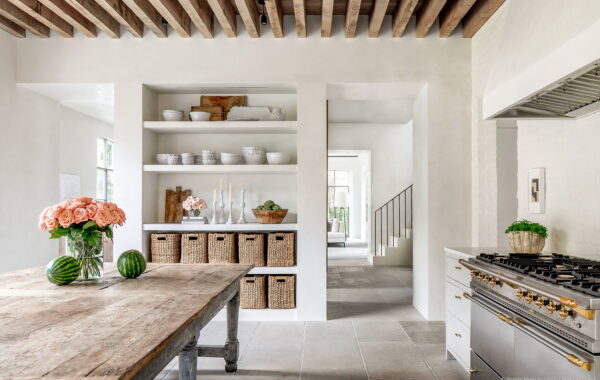
If you’re building new, stainless steel should be non-negotiable. Kitchens are focal points, and appliances anchor the entire space. This is not where you save a few dollars.
7. Vinyl Tub Surrounds
There is no excuse for vinyl tub surrounds in new construction.
I don’t want to hear about simplicity.
I don’t want to hear about ease of install.
They look cheap. They feel cheap. And they age poorly.
Spend the money. Do tile. Bathrooms are high-impact spaces, and nothing undermines a new home faster than plastic walls pretending to be something they’re not.
8. “Agreeable Gray” and “Canvas Tan” Paint
These colors had their moment—and that moment has passed.
Agreeable Gray. Canvas Tan. The greatest hits of the quick-flip era.
At this point, they signal one of two things:
- The home is older than it looks, or
- It was built fast with minimal thought
Paint is one of the easiest ways to give a home identity, and defaulting to these overused neutrals strips the house of any sense of intention.
Final Thought
Good homes age well. Bad material choices age loudly.
Most of the materials on this list aren’t catastrophic failures—they’re quiet compromises. And when you stack enough compromises together, you end up with a house that technically works but never feels right.
New construction is an opportunity to build with intention. Choose materials that improve with time, not ones that immediately start apologizing for themselves.
If you’re going to build—build like you mean it.