
How a simple foundation system taught me that the hard part of an estimate isn’t the math — it’s knowing exactly where your work ends.
I didn’t come to ICF on my own.
I came to it because an older master builder from California kept telling me to.
His name is Paul.
I was designing a new-construction foundation at the time, and he practically begged me to use Nudura ICF instead of what I was planning.
At first I was skeptical.
I didn’t even know how to change the construction drawings to detail an ICF wall.
That alone was enough to make me hesitate.
The Thing That Surprised Me
Then I met the Nudura distributor through White Cap.
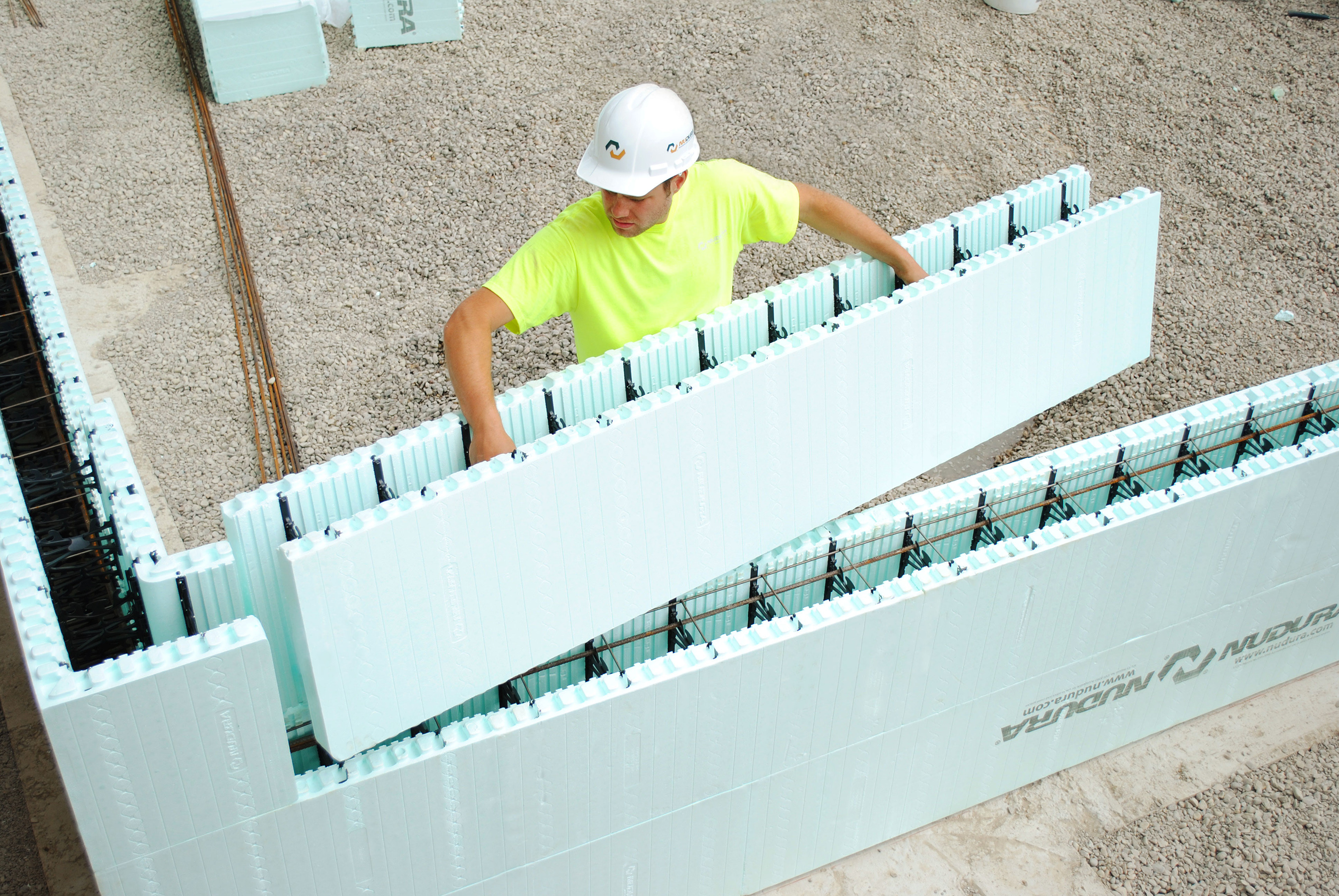
He came out to the warehouse and showed me the product — how the forms clip together, how a wall goes up.
I was honestly stunned at how simple it was.
Up to that point I had been thinking about a foundation as a masonry problem.
Heavy material. Skilled labor. Multiple steps. A trade I wasn’t sure I could reliably staff on my schedule.
The block is heavy, the work is slow, and I didn’t have the luxury of time.
ICF was the opposite.
When I saw how the forms went together, I realized I could do it myself.
And almost as importantly — I could price it.
Learning It in the Field
When I first learned to install, I leaned heavily on Paul.
I had him teach me in the field, on a real wall, with my own hands.
It was only later that I found out Nudura had a detailed installation manual, which I’ve now read extensively.
The field experience came first, and the manual filled in the rest.
Between the two, my confidence changed completely.
I went from someone who didn’t know how to draw the detail to someone who recommends the system.
What Made It Estimable
Here is the part that mattered most for how I work now.
ICF is simple enough that I can actually estimate it.
For every floor plan I’ve designed for my building plans, I’ve already specced the ICF forms, the reinforcing steel, and the cubic yards of concrete.
Three quantities.
That’s the core of the material takeoff, and none of them are mysterious.
Labor, accessories, bracing, waste and openings all sit around those quantities — but they sit around a clean center.
The system is simple enough that the takeoff is clean, and that makes everything built on top of it easier to price.
Part of why I kept coming back to ICF is that it put the power to estimate back in the builder’s hands.
The Number That’s Easy Isn’t the Number That Matters
But here’s the lesson I actually learned once I started pricing real jobs.
The block count is the easy part.
The estimate isn’t really about the ICF.
It’s about the boundary around the ICF.
On my own jobs, I install the ICF, the reinforcing steel, the window bucks, the bracing, and I clean up after myself.
I don’t do the excavation.
I don’t do the footings.
I don’t place the concrete.
I don’t bring the pump truck, the waterproofing, the drain tile, or the backfill unless we’ve agreed to it as an add-on.
That excluded list is doing more work than the included list.
Those aren’t just exclusions. They’re cost boundaries.
Every one of those items is a place where money can quietly leak out of a job.
If the boundary is vague, you end up absorbing someone else’s cost.
Knowing exactly what I’m not doing is what protects the number.
The Handoffs Are Where the Risk Lives
An ICF foundation sits in the middle of other people’s work.
The excavator goes before you.
The concrete crew works with you.
The waterproofer comes after you.
That’s three handoffs, and every handoff is a chance for scope to blur.
Most scope problems don’t happen in the middle of a trade’s work.
They happen at the interfaces between trades.
That’s true far beyond ICF. It’s just easy to see here.
If the excavation is off, your first course fights you.
If the concrete placement isn’t coordinated, that’s a problem that lands on the installer even when it isn’t the installer’s fault.
So the estimate isn’t just a price.
It’s a statement about where my responsibility starts and stops.
The clearer that line is on paper, the fewer surprises, change orders, and arguments there are on site.
An Estimate Is a Prediction, Not a Price
The other thing I’ve come to believe is that an estimate is a prediction.
When I hand someone a number, I’m predicting what a job will cost before anyone has moved dirt.
The only way to get better at that is to compare what I estimated against what the job actually cost, and then keep the record.
That’s why I’m building an estimating system for this work instead of pricing every job from scratch.
I want to eliminate the mistakes I’ve already made once.
I want the estimates to be consistent from one job to the next.
I want a history of real production numbers, so the tenth estimate is smarter than the first.
Every completed job should make the next estimate better.
None of that shows up in a single quote.
All of it shows up over time.
Why I Recommend ICF
I’ll be honest about one thing.
Part of the reason the distributor recommended me is that I bought the product and committed to it.
That’s a real trust signal, and I don’t pretend otherwise.
But the reason I keep recommending ICF is simpler: it’s estimable, it’s learnable, and it doesn’t depend on a trade that’s getting harder to find.
It gives a builder more control over the foundation.
The Lesson Isn’t Really About ICF
The ICF is what taught me the lesson.
But the lesson isn’t really about ICF.
Every construction estimate has a boundary.
Everything inside that boundary is my responsibility.
Everything outside it has to be clearly assigned to someone else.
A good estimate isn’t a price you pull out of the air.
It’s a decision about risk, made carefully, before anyone pours a wall.
The better I get at drawing that boundary — and at measuring what actually happens against what I predicted — the better builder I become.
That’s the part I’m still working on, every job.