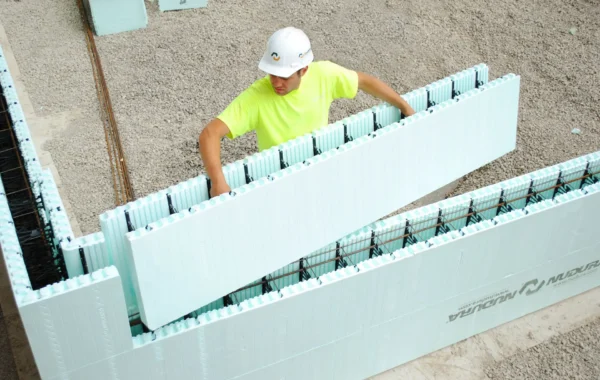

Ground-up development has real appeal. You find land, assemble a team, and create an asset that didn’t exist before. The numbers can be compelling, and the finished product is something you can drive past and point to.
I understand the appeal. I come from a family of builders. My grandfather was a carpenter, my father was a builder, and I’ve spent more than 17 years in residential construction myself. What I inherited wasn’t a company. It was a habit of looking past the finished house to everything it took to get there.
Yet I keep meeting people who want to become a real estate developer before they understand how a building actually gets built. In my experience, that gap is where some of the most expensive surprises begin.
Development Begins Long Before Construction
A residential project is often won or lost on paper before anyone breaks ground.
You have to understand the land. Are utilities at the lot line, or will you need new service connections? What will site preparation cost? Are there easements, drainage problems, or old foundations underground? What does zoning actually permit? What will plans, engineering, permits, and professional fees add to the budget?
Here in Detroit, a vacant lot can look like a bargain until you price the sewer connection, investigate the soil, and account for whatever is buried beneath it. The cheapest land is not necessarily the least expensive project.
Then comes construction: scopes of work, material specifications, trade pricing, schedules, inspections, and the dependencies between one trade and the next. You need to read a budget, recognize a number that doesn’t make sense, and catch a problem before it becomes an expensive change order.
Throughout the process, someone has to manage the money, make decisions, and take responsibility for the outcome. You don’t have to perform every task yourself. You do need to understand the work well enough to evaluate the people doing it.
Build One House Before You Build a Development Company
If your goal is to become a residential developer, I believe building a single house is one of the best places to start.
One house is a manageable introduction to a complex industry. You go through the entire sequence, from evaluating a lot and establishing feasibility to securing permits, arranging financing, managing construction, and delivering the finished product. You also see how early decisions affect costs and schedules months later.
Most of all, you develop judgment. You learn why two bids for the same scope can differ by tens of thousands of dollars, why the lowest price isn’t always the least expensive option, and how one late delivery can disrupt an entire schedule. You learn which details deserve attention, which assumptions need verifying, and which risks are worth taking. That judgment becomes the reference point for every project that follows.
This doesn’t mean every developer needs to become a carpenter or electrician. It means treating construction as a professional discipline rather than assuming someone else will figure it out.
Your Current Career May Matter More Than You Think
Good builders don’t only come from construction.
Project managers coordinate complicated work. Supply chain professionals understand procurement, lead times, and logistics. Finance professionals model capital requirements and manage cash flow. Operations professionals know how to make processes repeatable.
Residential construction is a technical business, but it’s also an organizational and financial one. Clear communication, accurate recordkeeping, managing competing priorities, and making decisions under pressure matter alongside technical knowledge.
Transferable skills don’t replace construction knowledge, but they give you a foundation on which to build it. You may not be starting from zero. You may simply need to apply what you already know to a new industry while deliberately learning what you don’t.
The Finished House Hides the Business
People see the architecture, the finishes, and the sale price. They don’t see the site investigations, design revisions, permitting delays, carrying costs, change orders, or unexpected conditions discovered when the excavator starts digging.
They also don’t see how much money goes out before anything visible happens. Land, plans, consultants, permits, materials, and labor all need funding, often long before a project generates revenue. Every delay can add to the carrying cost.
It’s a difficult combination: substantial upfront capital, real responsibility, and uncertain timing on the return. An inexperienced builder, an incomplete budget, an overlooked site condition, or a financing problem can push costs far beyond the original estimate.
Ambition is useful. Preparation is what turns it into a sustainable business.
Measure the Business, Not Just the Deal
Investors are used to evaluating acquisition costs, rents, projected sales, and returns. Those numbers matter, but they don’t tell you whether your building operation is healthy.
For that, track construction costs, labor rates, material prices, professional fees, permit costs, insurance, overhead, and the actual time each phase takes. Understand the difference between markup and margin. Compare budgets against actual costs, identify where delays originate, and know the difference between revenue, gross profit, and what actually stays in the business.
Over time, those records become an asset. They sharpen your estimates, expose weaknesses, and help you decide which projects to pursue and which to pass on. The goal isn’t one profitable house. It’s a process you can repeat with greater accuracy, tighter cost control, and less guesswork.
Think in Decades, Not Deals
In my view, an enduring construction company can take decades to build. We see large home builders as they operate today, not the small businesses they were when they started.
Wanting to build something substantial is reasonable. The real question is whether you’ll do the unglamorous work to get there:
- Will you keep studying construction when you don’t have an active project?
- Will you learn from people who have done the work longer than you?
- Will you keep accurate records and examine your mistakes honestly?
- Will you hold off on a larger deal until you have the knowledge and systems to execute it?
A small project is worthwhile if it prepares you for the next one. A large one becomes expensive when it exposes gaps you could have closed beforehand. Growth should follow demonstrated capability, not simply the availability of a bigger opportunity.
What Are You Actually Trying to Build?
People enter home building for different reasons: a new skill, a career, an investment business, or a company they can pass on to their children. Those goals overlap, but they aren’t interchangeable. Knowing yours helps determine which projects to pursue, which skills to develop, and how quickly to grow.
Home building is demanding, heavily regulated, and full of decisions with real financial consequences. It is not a shortcut to wealth. But if you’re willing to learn the business, manage risk, and improve with every project, it offers something more durable than a single asset: a professional capability you can continue developing throughout your life.
There’s also a responsibility in this work that’s easy to overlook when you’re focused on a pro forma. Someone is going to live in what you build. They’ll raise a family there, make mortgage payments for decades, and trust that the parts they can’t see were done correctly.
Learning to build a house is how you begin earning that trust before you ask anyone to place it in your hands.
Frequently Asked Questions
Do I need construction experience to become a real estate developer?
Not hands-on trade experience, but you do need to understand how a house gets built. Without it, you can’t judge a bid, a schedule, or a budget, and you’re relying entirely on others to catch problems. Building one house, start to finish, is one of the fastest ways to get that understanding.
What is the difference between a builder and a developer?
A developer finds the opportunity, controls the land, arranges the financing, and carries the risk of the project. A builder turns the plans into a finished house: managing trades, materials, inspections, and schedule. Many small developers do both, which is exactly why construction knowledge matters.
Do you need a license to build homes in Michigan?
In Michigan, building homes for other people or for sale generally requires a residential builder license from the Department of Licensing and Regulatory Affairs (LARA). Check the current rules for your situation before you start, because the requirements depend on who the house is for and what you plan to do with it.
Thinking about your first build in Metro Detroit? Start with a Lot + Home Feasibility Package, or contact me at 313-450-9311 to talk through your lot and your plans.